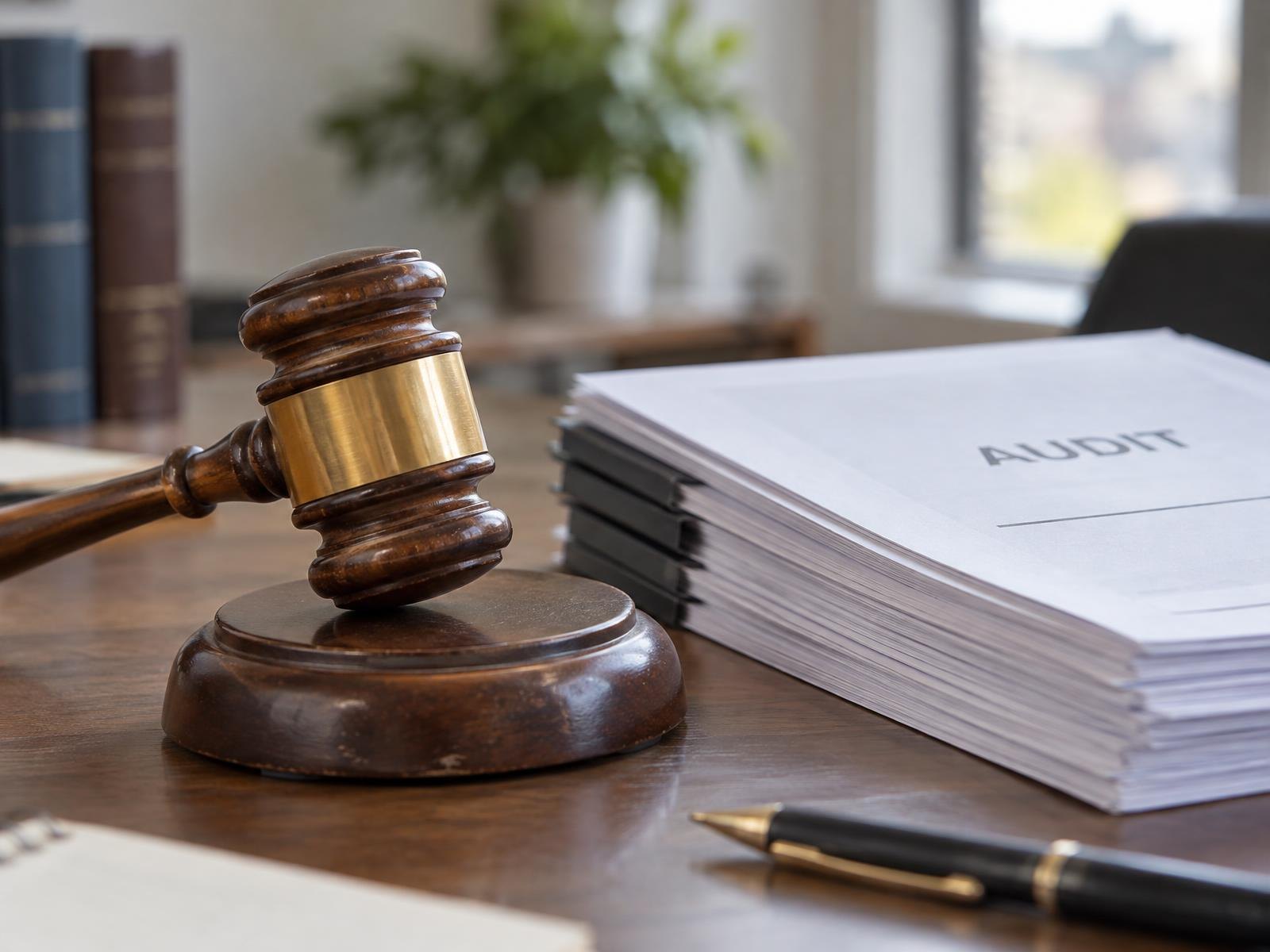
The Republican and Democratic candidates for Missouri state auditor agree the state faces a looming budget shortfall. They disagree sharply over what the auditor should do about it.
Incumbent Scott Fitzpatrick and challenger Quentin Wilson laid out competing visions for the office in interviews with the Missouri Independent, first reported Oct. 12. The race is the only statewide elected-office race on the Nov. 3 ballot, and the outcome will shape oversight of Missouri's more than 4,000 political subdivisions.
Fitzpatrick, a former chairman of the Missouri House Budget Committee, sees the auditor as a fiscal watchdog. His job, he said, is to independently assess state finances, warn lawmakers about shortfalls and root out waste and fraud. His June report projected that the general revenue balance would be exhausted early in fiscal 2028 unless spending was reduced.
"I do not see any prospects of a federal bailout coming to soften the blow of what's about to happen this time," Fitzpatrick told the Missouri Independent. "I think what we're getting ready to encounter is unprecedented."
Wilson, a Kirkwood Democrat who held leadership roles in state agencies over two decades, wants to reshape the office into something closer to the federal Government Accountability Office. He said the auditor should look ahead to find savings and improve government performance, not just look backward at whether the books balance.
Wilson said that approach could save up to $1 billion a year. He said his team reduced the time to process a state tax refund from 37 days to four.
New Subpoena Power in Local Audits
Fitzpatrick highlighted a tool he pushed through the Missouri General Assembly in 2024. House Bill 2111 passed unanimously, 145-0 in the House and 32-0 in the Senate. The law lets the auditor's office bypass the old requirement for a resident petition or governing-body invitation and move directly from a whistleblower investigation to a full audit when it finds improper activity. It also grants subpoena power during the investigative stage.
The first audit under that authority targeted the city of Arnold. Fitzpatrick said it exposed the city's practice of creating transportation development districts to collect taxes without a public vote.
His office also investigated Jackson County's 2023 property assessments, finding problems with the county's assessment and appeals process. Separate litigation led to a proposed class-action settlement covering about 207,000 taxpayers, worth up to $250 million, according to KCUR. A fairness hearing is set for Nov. 23.
Missouri has the second-largest number of political subdivisions of any state. Fitzpatrick said most fraud cases his office has found involve local governments, not state agencies.
Wilson Questions Independence, Speed
Wilson has criticized Fitzpatrick's audits for taking too long, arguing reports sometimes arrive after the problems have changed or the officials responsible have left office. He also questioned Fitzpatrick's independence from fellow Republicans, pointing to allegations in a wrongful-termination lawsuit filed by a former employee of the Secretary of State's Office. The lawsuit alleges Fitzpatrick's chief of staff participated in a conversation about routing concerns over voter registration data through the auditor's whistleblower process.
Fitzpatrick disputed that characterization, saying his chief of staff only explained normal procedures for submitting a complaint. No complaint was ultimately submitted, he said.
Wilson's campaign has also claimed Fitzpatrick's office produced 70% fewer audits than his predecessor despite a 40% budget increase. That figure has not been independently verified.
Libertarian Dustin Coffell is also on the ballot. Voters head to the polls Nov. 3.