Monarch Fire Protection District paramedics have already administered their first blood transfusion in the field, just weeks after launching a program that puts packed red blood cells and liquid plasma on an emergency medical services (EMS) Captain vehicle serving Chesterfield, Wildwood, Ballwin, Clarkson Valley and surrounding communities.
The milestone, reported by KMOV on Tuesday, July 22, makes Monarch one of three fire protection districts in the St. Louis metro now carrying blood on ground units, alongside St. Charles County Ambulance District (SCCAD) and Mehlville Fire Protection District. Nationally, roughly 2% to 3% of ground EMS providers do so, according to officials from both Monarch and SCCAD. The practice originated in air medical helicopters and has only recently migrated to ambulances.
Monarch is the eighth EMS organization in Missouri to offer pre-hospital blood transfusions. The district said it wants to help other departments obtain the training and resources needed to expand the practice across the metro, though it has not named partner agencies or a timeline.
How the program works
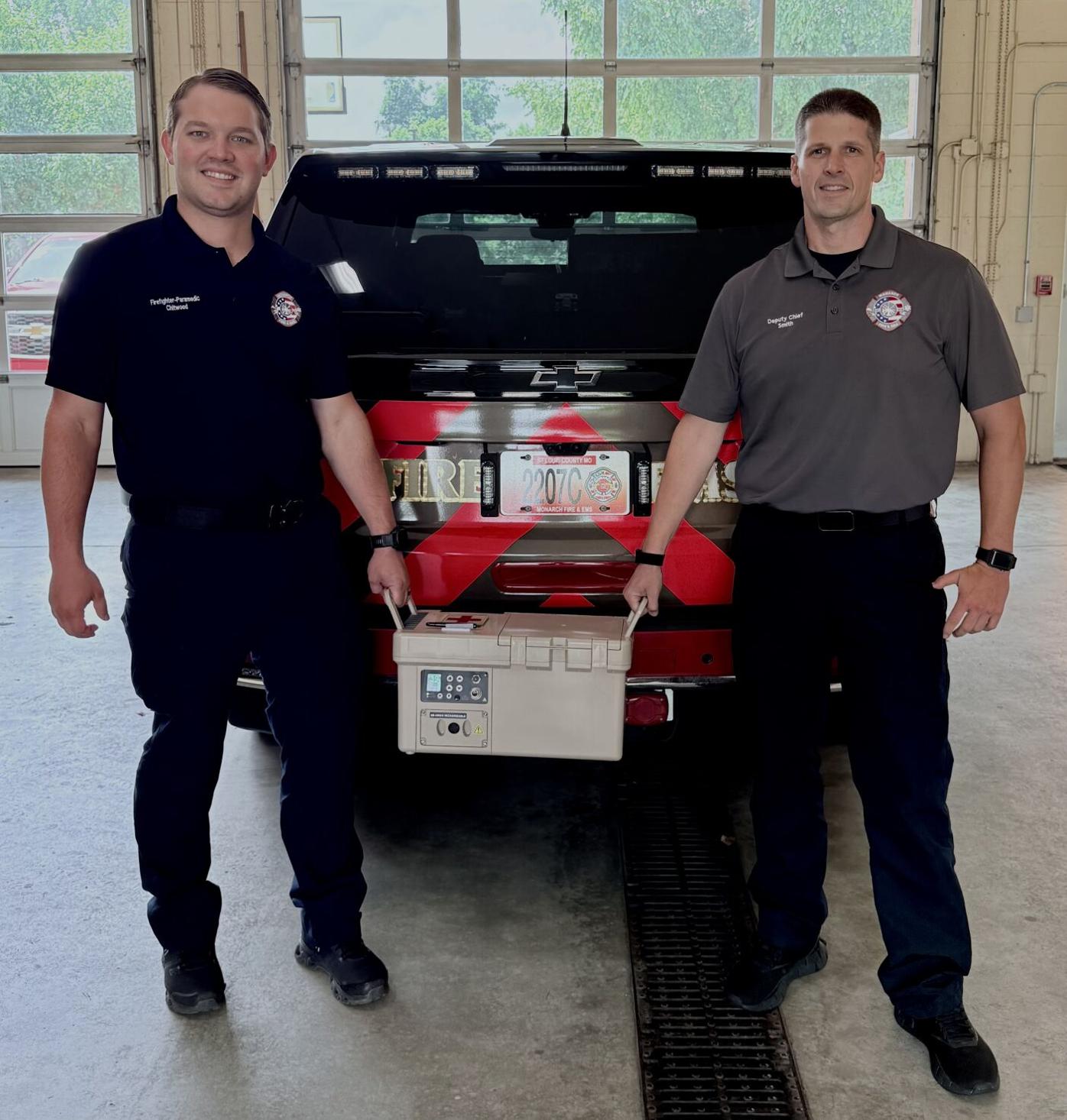
The blood products ride in a temperature-monitored cooler that alerts crews if conditions drift outside the required range. Monarch's paramedics conduct daily temperature checks and follow protocols developed over months with Medical Director Dr. Mike DeFilippo of Washington University Medicine and the district's blood supplier, ImpactLife. Every paramedic authorized to administer blood completed dedicated training before the July 6 launch, according to the district's press release.
The program targets patients suffering life-threatening blood loss from trauma, gastrointestinal hemorrhage, obstetric emergencies and other conditions where minutes matter.
"Even if it's five or ten minutes before they get to the hospital, [it] can save a life," Nick Smith, Monarch's deputy chief of EMS, told KMOV.
A rare capability in Chesterfield
Grant Chitwood, a Monarch Firefighter EMT-P, told KMOV on July 22 that the local adoption stands out on a national scale. "3% of emergency medical providers carry blood. When you think of something here in Chesterfield, it's just mind-blowing," Chitwood said.
David K. Tan, chief medical officer for SCCAD, put the national figure even lower in a West Newsmagazine report published July 20. He said only a tiny fraction of ambulance services carry blood, estimating the number at about 2%, though he noted that's far more than a couple of years ago.
SCCAD, which began its own program in October 2025, has administered 52 transfusions since then. Tan acknowledged the financial burden: the district loses nearly $1,000 each time it gives blood. But he described paramedics stopping him in the hall, unable to believe how fast it works.
Jamie Rizzo, a young mother of three who received a pre-hospital transfusion from SCCAD after a severe car crash, said in a July 7 KMOV report that the blood she received before reaching the hospital "absolutely saved [her] life."
Cost, scale and what comes next
Monarch serves more than 60,000 people across 63 square miles in west St. Louis County, employing 133 full-time personnel under Fire Chief Russ Adams. Smith said in the district's press release that blood cannot be replaced by IV fluids alone, and that the program exists because the community deserves the best possible chance of survival in a hemorrhage emergency.
John Romeo, SCCAD's deputy chief of professional standards, told West Newsmagazine he expects the practice to become standard of care within five years. The federal government has committed $80 million nationally to pre-hospital blood programs through the National Highway Traffic Safety Administration (NHTSA), with more grants expected.
For residents in Monarch's coverage area, the practical change is immediate: when you call 911 for a bleeding emergency, the EMS Captain vehicle now rolls with blood on board.
-2.jpeg)