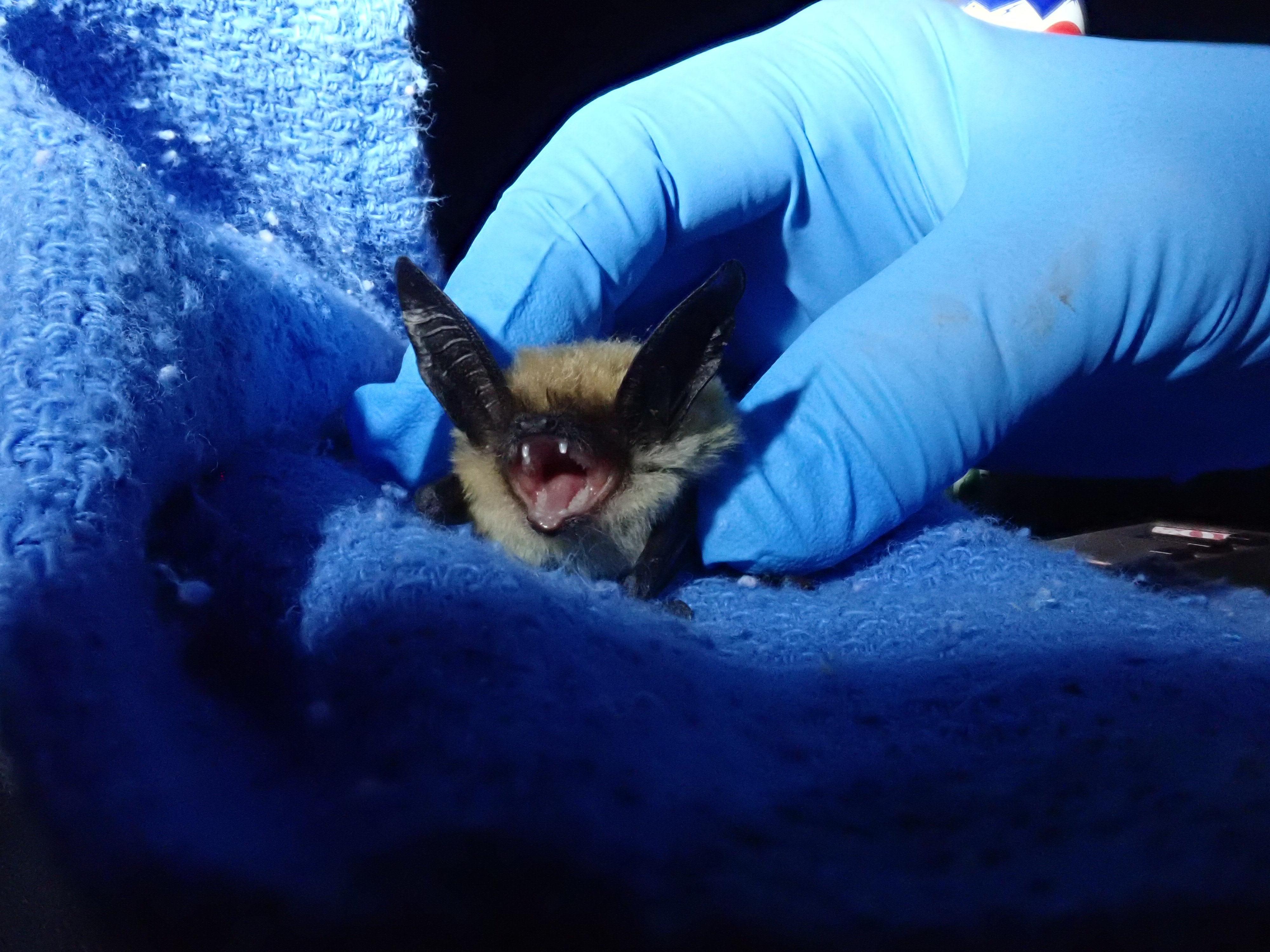
If your family spends summer evenings outdoors, whether in the backyard or at a local park, know this: July and August are peak months for bat encounters across St. Louis County, and health officials say one rule matters most. Never touch a bat with bare hands.
Oakville resident Mark Drake learned that lesson the hard way. Drake found a bat on the ground behind his home and picked it up.
"I reached down and it just crawled up on my finger," Drake said. "It never crossed my mind that I should not touch this bat."
His wife drove him to an emergency room, where doctors started a series of rabies shots. According to the St. Louis County Health Department, a bat's wing claw is so small that a scratch can go unnoticed, which is why any bare-hand contact is treated as a potential exposure. Drake's bat tested negative, but doctors recommended he complete the four-visit shot series as a precaution because rabies testing is not 100 percent reliable.
Amanda Brzozowski, senior epidemiologist at the St. Louis County Health Department, said her team tests 25 to 30 bats per week for rabies during peak season. Michael Beran, owner of Wildlife Command Center, said he fields 12 to 15 bat-removal calls per week. Beran said female bats have their babies in midsummer, which can roughly double the local population over a few weeks.
The county confirmed its first rabies-positive bat of 2026 on April 16 at a Kirkwood home. Fewer than 3 percent of bats carry rabies, but the disease is almost always fatal once symptoms appear.
What to do if you find a bat:
- Do not touch it. An adult bat on the ground is likely sick or injured.
- If a bat is inside your home, confine it to the room where you found it. Do not release it outside before it can be tested.
- Treat any bat found in a bedroom as a potential exposure, especially if someone was asleep.
- Call St. Louis County Animal Care and Control at 314-615-0650 (Monday–Friday, 10 a.m.–6 p.m.) to have the bat collected.
- If you believe you've been exposed, call the health department's communicable disease investigators at 314-615-1630.