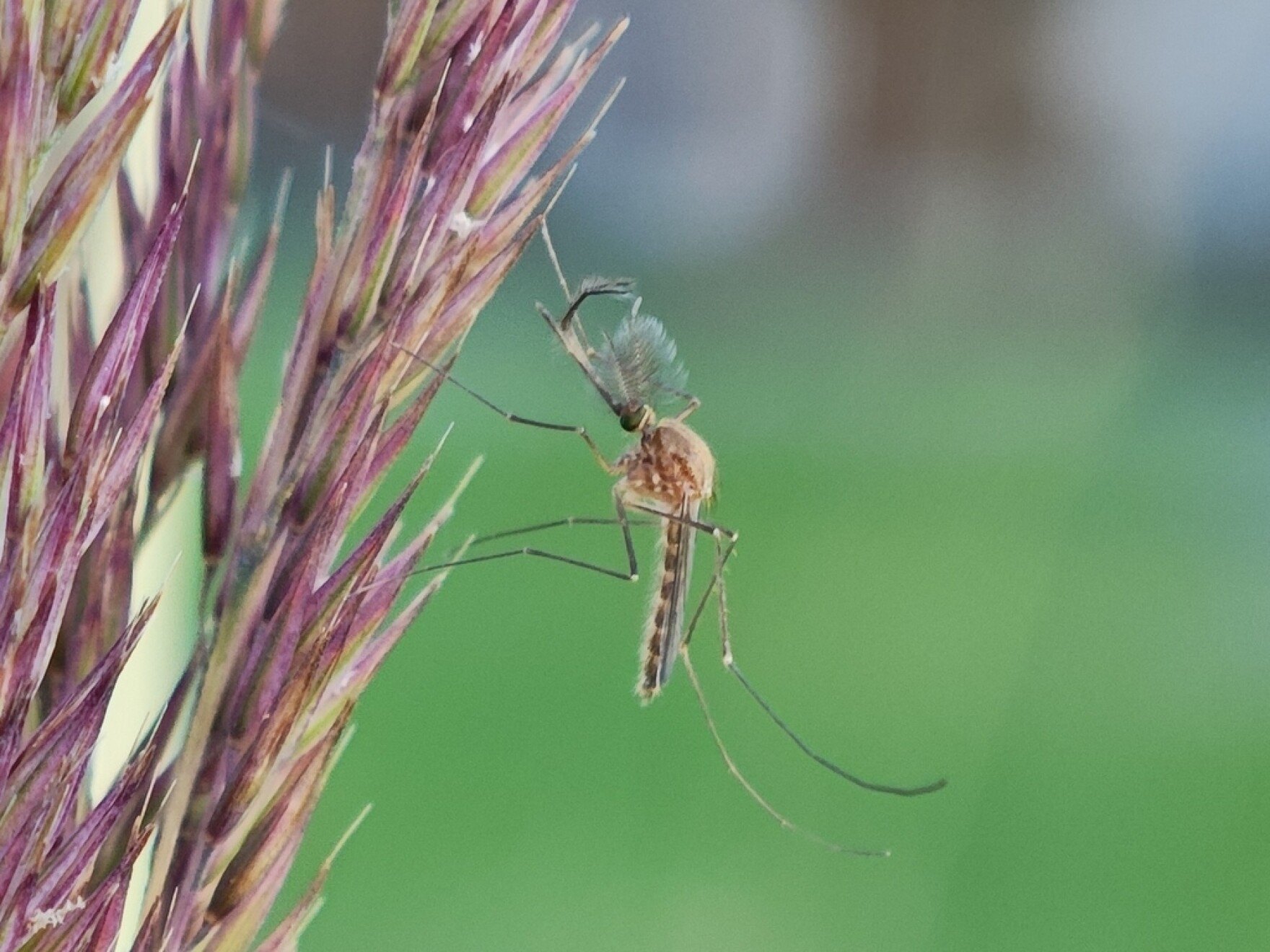
West Nile virus has been detected in St. Louis County for the first time this year, and one local city is heading into the season without its old line of defense.
Ballwin's Board of Aldermen voted unanimously in August 2025 to end the city's decades-old residential fogging program. The decision came down to science, according to the city's February 2026 Ballwin Life Magazine: the chemical spray wasn't reducing mosquito populations, and it was killing beneficial insects in the process. Now, as Ballwin's first summer without fogging trucks coincides with a regional mosquito spike and a national West Nile surge, the policy shift is getting fresh attention.
West Nile confirmed in St. Louis County
The St. Louis County Department of Public Health confirmed its first West Nile virus-positive mosquito sample of 2026 on Wednesday, July 9. The sample was collected from a trap site in Richmond Heights. In 2024, three St. Louis County residents contracted West Nile. About 1 in 150 infections leads to neurological illness that may be fatal, and there is no vaccine.
The risk extends well beyond the region. The Centers for Disease Control and Prevention reported 48 human West Nile cases nationally by the end of June 2026, according to CDC data reported by SFGate. That's the highest total by that point in the year since 2004 and nearly five times the 10-case average. Twenty-three states reported West Nile activity, also a 10-year high.
Jean Ponzi, green resources manager at the Missouri Botanical Garden's EarthWays Center with more than 30 years of experience as an environmental educator, said the worst of mosquito season is still ahead.
"When we have heavy rains, that washes out storm drains and sewer pipes where Culex [common house] mosquitoes tend to reproduce," Ponzi said on STLPR's "St. Louis on the Air" on Tuesday, July 15. "But when the rain slows down and the heat kicks up, then it'll be mosquito world."
Why Ballwin stopped spraying
For years, Ballwin's Public Works Department sent fogging trucks through residential streets weekly from late May to mid-September. The program looked like action. But the Board of Aldermen concluded the service simply wasn't working.
The problems were mechanical. The adulticide chemical had to make direct physical contact with mosquitoes to kill them. Spraying had to happen in the narrow evening window when mosquitoes are active but other insects aren't. Weather conditions had to be perfect for the chemical to drift beyond the street or front yard. And many residents had opted out entirely, forcing the truck operator to shut off the sprayer at those addresses, leaving gaps in coverage.
The city's Public Works Committee discussed the issue across several meetings in 2025 and prior years before recommending the change. Effectiveness, not cost, drove the vote.
Ponzi said the science supports Ballwin's decision. Municipal fogging, she said, does nothing to interrupt mosquito breeding and harms pollinators that communities depend on. St. Louis County's approach offers a contrast: the county surveys and traps mosquitoes first, identifies species and evaluates disease risk, and only then runs a targeted route with equipment calibrated so the droplet size affects tiny mosquitoes but is less likely to harm larger insects like bees and butterflies.
The Missouri Botanical Garden's own guidance to residents is blunt: "DON'T resort to chemical fogging! Bug spray kills bugs, period."
Ballwin still contracts with St. Louis County Vector Control Services for larvicide treatment, targeting mosquitoes at the breeding stage rather than in the air.
What residents can do now
Emily Althoff, a University of Missouri Extension urban entomology specialist, said the most effective step is eliminating standing water.
"If you have things like equipment in your yard, if you have gutters that may be clogged, ensuring that those things aren't retaining stagnant water can be really beneficial in reducing the amount of larval habitat on your property," Althoff said on the same July 15 broadcast.
For residents in Chesterfield, Wildwood, and surrounding communities, the county's larvicide trapping program remains active. Trap sites are set throughout St. Louis County and checked regularly; collected mosquitoes are counted and identified by species in a laboratory.
Adults over 50, people with weakened immune systems, and those with chronic health conditions face the highest risk from West Nile. The county health department recommends wearing long sleeves at dawn and dusk, using EPA-registered repellent, and repairing window screens.
Ballwin's next mosquito season will be its second without fogging trucks. The county's larvicide program and this summer's West Nile case count will be the first real measures of whether the science-first approach holds up.